The U.S. away-from-home (AFH) alcohol market is still big business — roughly $150.2 billion in 2025, according to Mintel — but growth is slow, at about 1.3% year over year. Consumers haven’t abandoned bars and restaurants; they’re just more intentional about when they go out and what they order.
Moderation, tighter budgets, and a booming at-home cocktail culture mean every visit has to work harder. Guests are not simply drinking less; they’re drinking differently — moving across non-alcoholic (NA), low-ABV, and full-strength options in a single occasion, and scrutinizing whether every dollar feels worth it.
For operators and beverage brands, that creates both pressure and opportunity.
Ansira has analyzed and gleaned insights from statistics from Mintel’s US Foodservice Alcohol Trends Report 2025. All data in this blog is derived from the aforementioned report.
A powerful but pressured growth engine
Beer, wine, and spirits in AFH channels are projected to grow slowly as moderation becomes more widely adopted. At the same time, at-home consumption continues to outpace AFH, with many consumers only going out when there’s a compelling reason.
That shift changes the stakes:
- On-premise visits are more intentional and higher value, not casual defaults.
- Every visit is an opportunity to deliver discovery, perceived value, and a memorable experience that justifies the incremental spend.
In this environment, menus, pricing, staff, and social content can’t operate as separate projects. They have to function as a connected system that makes going out feel smarter — and more fun — than staying home.
How is drinking behavior changing?
On-premise behavior is increasingly polarized. Casual, low-engagement drinking occasions are declining, while more frequent visitors are leaning into experiences — without necessarily ordering more full-strength drinks.
Cross-ABV behavior is the norm
About 23% of consumers say they are switching between alcoholic and non-alcoholic beverages on the same occasion more often than in 2024. Guests might start with a low-ABV spritz, move to a full-strength cocktail with dinner, then finish with an NA nightcap — and expect every drink to feel equally “worth it.”
Gen Z and Millennials are driving change
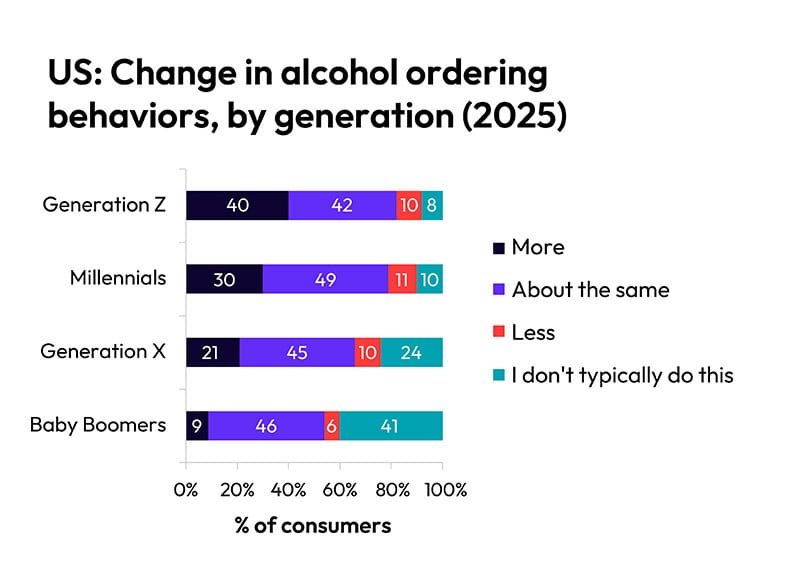
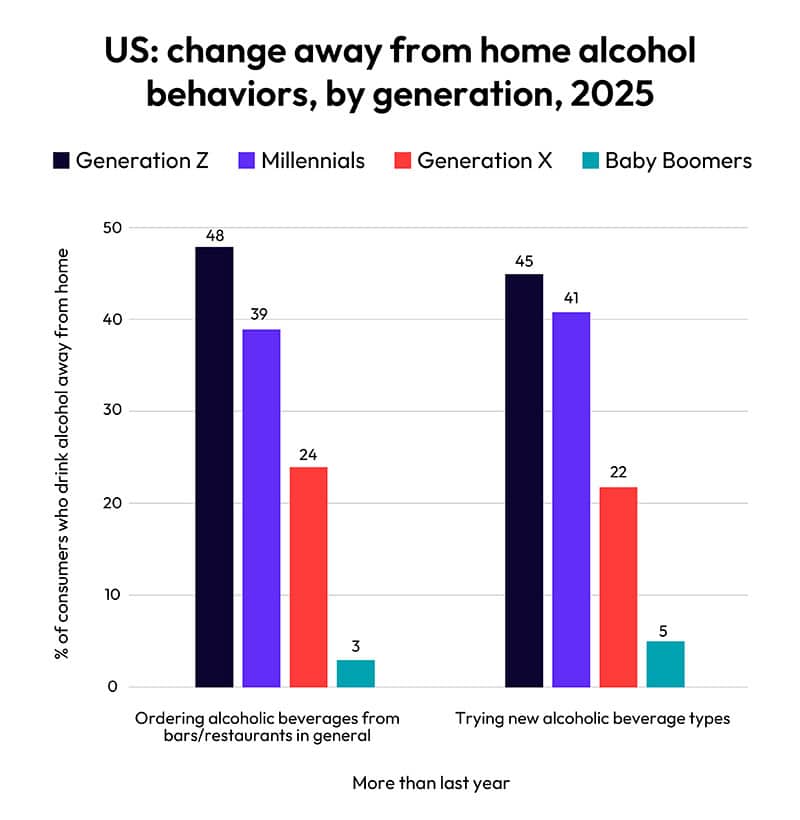
Gen Z and Millennial consumers are ordering more AFH alcohol and trying new things, but within tighter financial constraints. They want drinks that feel special and experience-worthy, while staying highly deal-conscious and budget-aware.
The venue still matters
Many younger consumers say drinks taste better away from home, underscoring the value they place on professional execution, ambience, and hospitality. They’re willing to trade up when the experience feels curated and elevated — but only if every dollar feels like a smart spend.
Social media sets expectations
For Gen Z, social platforms now sit at the top of the discovery funnel, serving as a source of alcoholic beverage inspiration for consumers. It’s where they first encounter new flavors, formats, and venues, and where they see limited-time offers (LTOs), theatrical serves, and collectible glassware they want to experience in person, and many are intentionally seeking out drinks they’ve seen online more often. At the same time, a countertrend of phone-light and phone-free venues is emerging, as some guests seek spaces to be present and connect in real life.
Put simply, discovery often starts on a screen — but the judgment call happens at the bar.
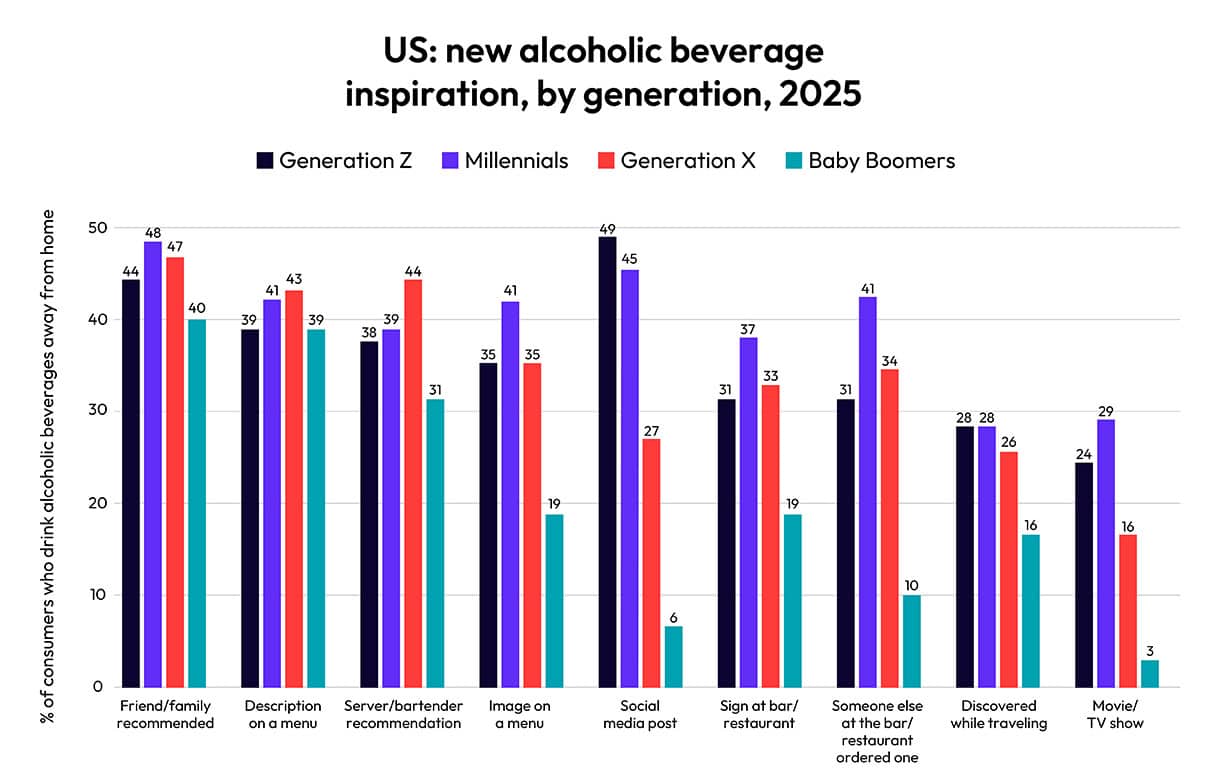
More than half of consumers say drinks taste better away from home, and nearly a quarter are visiting bars and restaurants specifically to celebrate. Ambience, signage, and service either reinforce the expectations set online — or break them.
Limited-time offers with photogenic builds and collectibles can bridge this gap. Examples like Chili’s Wicked-inspired margaritas with swizzle stick wands or Outback’s gingerbread-themed drinks with take-home characters show how culture-tied LTOs can fuel both social buzz and in-venue excitement. Around 27% of consumers say they’re interested in drinks that include a collectible, with especially strong appeal among Gen Z.
Design menus as ABV ecosystems
Guests now expect menus to function as ABV ecosystems, not separate silos for NA, low-ABV, and full-strength. They want to move up and down the ABV spectrum without sacrificing flavor, texture, or visual appeal.
That has implications for how menus are built:
- Cross-ABV systems should be designed as one cohesive spectrum, not an NA insert stapled to the back of the list.
- Flights, half pours, and format variations can extend stays and exploration without encouraging overconsumption — but only if NA and low-ABV offerings feel just as considered as full-strength builds.
- Organizing by flavor or mood (rather than just by spirit or price) helps guests shop by how they want to feel, not just what they already know.
Spritzes and wine-based cocktails are especially powerful here. About 31% of consumers report having a wine-based cocktail in the past 12 months, and 54% say they’re interested in less common white spirits.
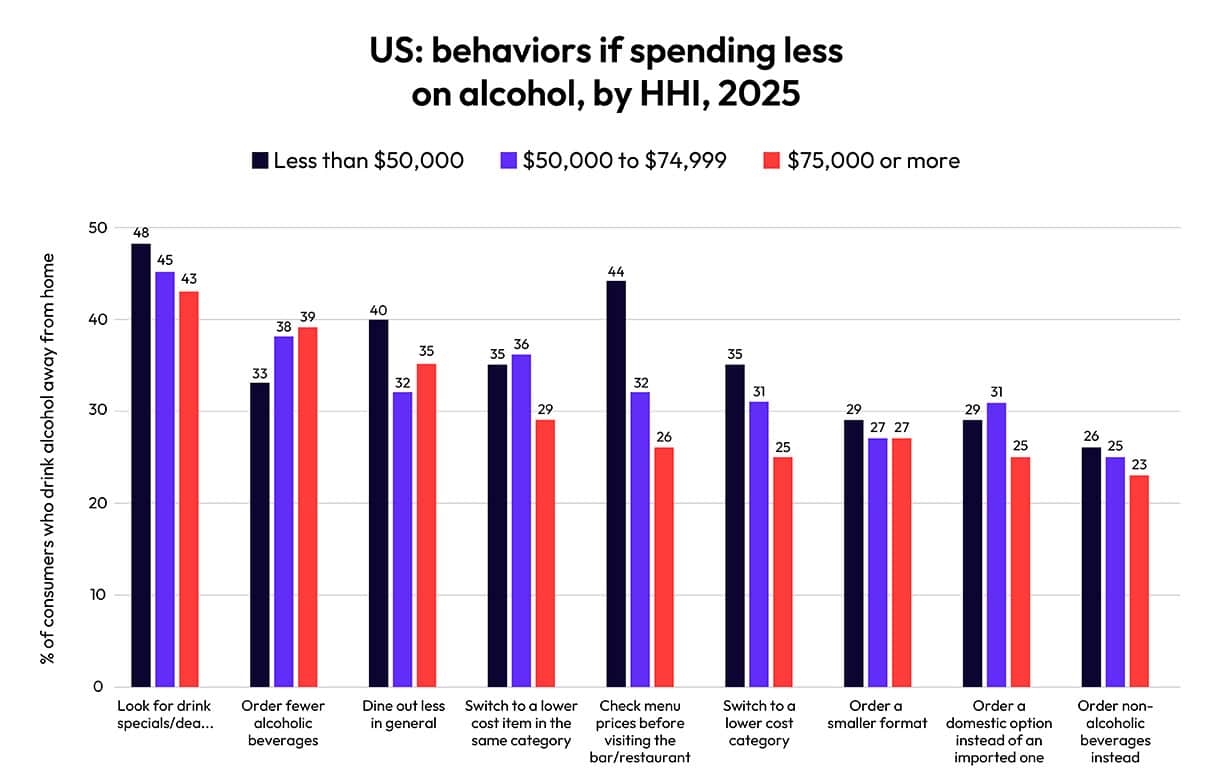
It’s also important to note that for guests earning under $50K, menu communication is critical. Nearly half say they’re inspired by descriptions, and 40% point to images as motivators to try a drink. That makes well-crafted copy and strong photography central to perceived value, not nice-to-haves.
Make premium feel like an enhancement, not an expense
Traditional “top-shelf” premiumization — pushing guests up a price ladder just because it’s there — is losing relevance, especially with younger drinkers. What resonates instead is visible enhancement.
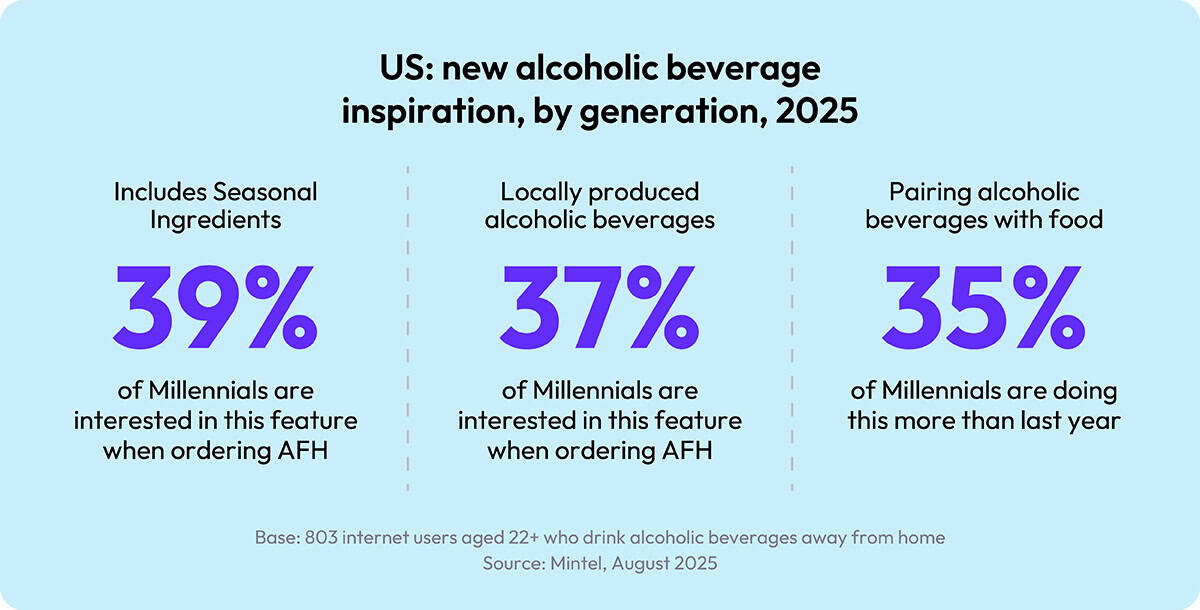
Millennials, in particular, show strong interest in:
- Seasonal ingredients and locally produced beverages as signals of quality and authenticity
- Pairing alcohol with food more often, with more than four in ten strongly agreeing that trying new beverages is a treat
About 31% of consumers say they’re interested in tableside presentation, and 43% care about clean ingredients and visible craft techniques like house-made syrups or seasonal garnishes. When guests can see the quality, they’re more willing to pay for it.
Build value architecture that earns the visit
Value is no longer just about deep discounts; it’s about ensuring every choice feels smart. That’s especially true when:
- 34% of consumers say they seek deals
- 42% cite cost as a barrier to AFH alcohol
- 46% of Gen Z identify as deal-seekers
Nostalgia flavors and snackable garnishes are another powerful lever. 32% of consumers are interested in nostalgic flavors, 26% are drawn to unique garnishes, and 30% would pay more when a small snack is included. “Drink-plus-bite” bundles function like mini appetizers or desserts, justifying modest price lifts while elevating the perceived experience.
Turn staff into the conversion engine
Front-of-house teams have always mattered, but today they’re the primary conversion engine. Guests arrive with more information, more options, and more caution — and they often need reassurance to try something new.
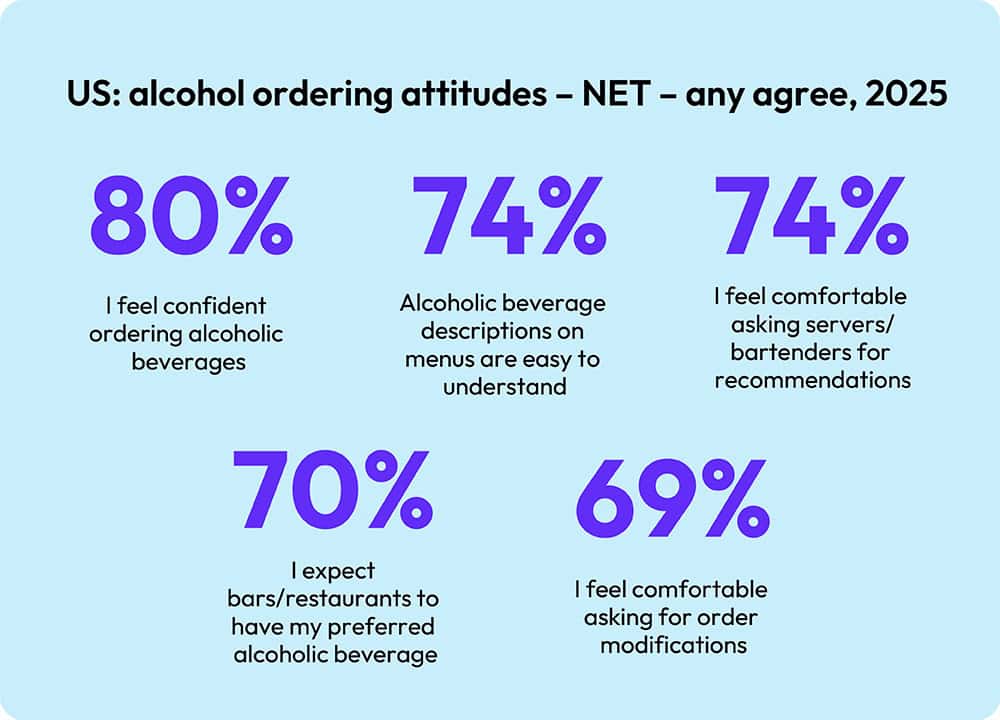
Research shows that staff guidance helps consumers upgrade their alcohol experiences across income levels, maximizing inclusivity and upsell opportunities. Lower-frequency drinkers benefit from:
- Pairing suggestions
- Tasting notes
- Approachable twists on familiar classics
Higher-income guests often respond to small but meaningful upgrades that elevate the occasion. Younger guests, in particular, are willing to engage — they actively ask for modifications and recommendations, creating natural openings for exploration if staff are equipped with the right tools and language.
Distinctive colors, glassware, and garnishes also help staff connect what guests saw in a reel with what they see across the room, turning curiosity into orders.
What it all means for brands and operators
Taken together, these trends point to a clear conclusion: incremental tweaks aren’t enough. Winning in 2026 and beyond requires rethinking how menus, pricing, staff, and social content work together as a unified system.
Priorities for operators and brands include:
- Designing cross-ABV menus that treat NA, low, and full-strength offerings as one cohesive portfolio
- Framing premium as visible enhancement through sourcing, theatre, and pairing — not just higher price points
- Building value architectures that make deals and tiers obvious while protecting brand equity
- Investing in staff enablement so every interaction becomes a chance to encourage smart, satisfying exploration
- Treating social media as top-of-funnel intent and the venue as the closer, with LTOs and collectibles that carry stories from screen to seat
How Ansira helps bring this to life
This is exactly the kind of complex, multi-channel challenge Ansira is built to solve. With decades of experience supporting distributed sales networks and brand-to-local ecosystems, Ansira unifies strategy, creative, technology, and operations so brands and their partners can execute cross-ABV menus, value architecture, and staff programs consistently and at scale.
Ansira’s playbook converts trend insights into repeatable programs powered by solutions like Ansira Create, Ansira Attract, and Tastebuds.
Examples include:
- ABV spectrum menu design that clusters drinks by flavor or mood, clearly signposts ABV, and uses ladders, flights, and half-serves to encourage responsible exploration — with NA and low-ABV serves getting equal creative treatment.
- Value architectures and price ladders that make deals intuitive, backed by templates, local media, and operational sourcing for barware and accessories.
- Staff scripts and micro-trainings that make good–better–best recommendations, familiar-to-adventurous swaps, and NA-to-full mirrors easy to execute.
- Culture-tied LTOs and collectibles with professional photography, social-ready creative, and turnkey sourcing that connect social buzz to in-venue excitement.
For brands and operators ready to move from isolated experiments to a connected, cross-ABV growth strategy, Ansira’s beverage alcohol strategy leaders and unified platform work together from insight to execution.
Book a demo to see the platform in action.