
You’ve probably encountered online advertising in the last five minutes alone — through your email inbox, on social media, or in your Google results.
In an increasingly digital world, how do you cut through the noise amid an endless barrage of online marketing?
With a strong direct mail marketing strategy, you can surpass the crowded inboxes and put your brand directly into local consumers’ hands and homes — no scrolling past or “mark as read” involved.
What is direct mail marketing?
Direct mail marketing is the process of sending physical promotional materials like flyers, coupons, postcards, and brochures through the mail directly to local consumers. This method includes any physical correspondence intended to encourage individuals to interact with your brand.
Brands typically use direct mail marketing to create brand awareness, generate interest in products or services, or supplement existing sales efforts.
How effective is direct mail marketing?
Despite living in a highly digital world, direct mail is still a highly effective marketing strategy, with 79% of business executives stating that it provides the highest ROI of any other channel.
Additionally, 62% of consumers said that direct mail marketing has motivated them to engage with brands, whether by visiting their website, purchasing a product or service, visiting a store location, searching the brand online, or looking up reviews.
Why use direct mail marketing?
Running a direct mail marketing campaign comes with many benefits for brands and their channel partners, including:
- Standing out: The average person receives over 100 emails per day. Direct mail helps you cut through the digital noise and stand out from the spam.
- Memorability: Unlike digital tactics, direct mail provides consumers with a physical piece of marketing, creating a more memorable, tactile experience.
- Better response rates: The average response rate for direct mail marketing is 4.4% compared to only 0.12% for email.
- Greater ROI: Direct mail marketing campaigns generate an average ROI of 35%.
- Creativity: With direct mail pieces, you can get creative by incorporating engaging physical elements like pull tabs, scratch-offs, and pop-ups.
How to create an effective direct mail marketing strategy
Creating an impactful direct mail marketing campaign only takes six simple steps.
1. Define your audience
First and foremost, level-set your strategy by determining your target audience. Pinpoint who your content is intended for, considering factors like age, location, income, and education level. Understanding who your target consumer is will help you tailor your direct mailers toward their unique needs, interests, and behaviors.
It’s a good rule of thumb to evaluate your contact lists every three to six months to ensure your audience segments are accurate and up to date for your direct mail campaigns.
2. Choose your mailers
Direct mail can (and should) be more than a simple letter in an envelope. With so many types of direct mailers available, it’s important to choose one that best presents the offerings or message you’re trying to emphasize.
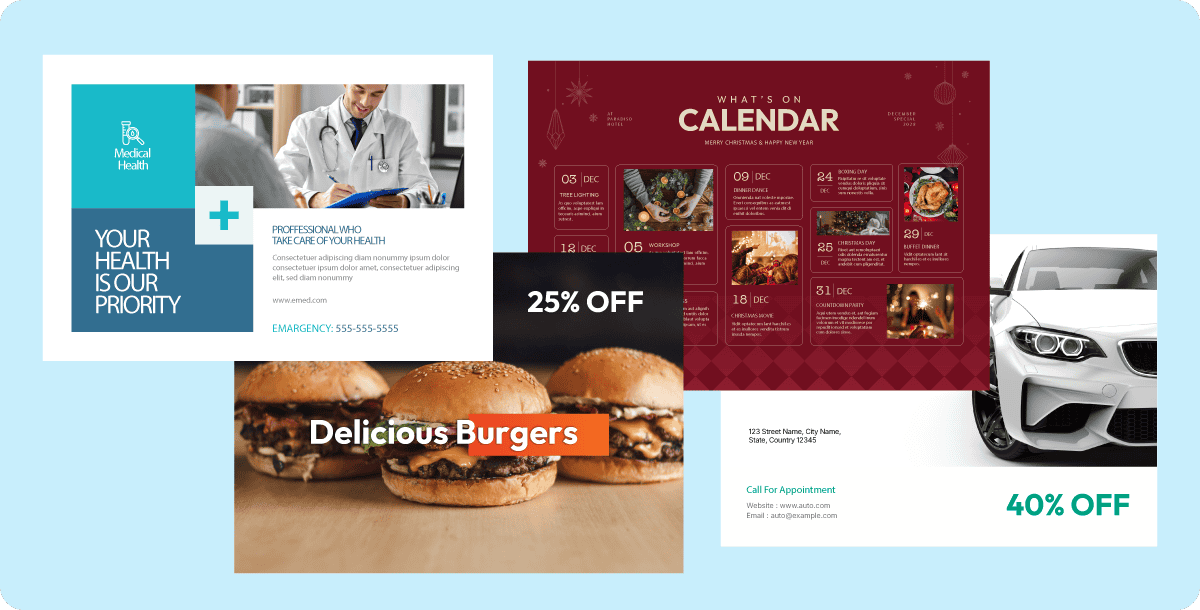
Some of the main types of direct mailers include:
- Postcards: Postcards catch recipients’ attention with vibrant colors and concise messages without using an envelope.
- Flyers: Flyers are ideal for communicating timely offers and events at a low cost.
- Brochures: Direct mail brochures are available in one-page and multi-panel varieties, presenting a high volume of images and information in a well-organized manner.
- Letters: Enveloped letters are a more personal and cost-effective means of contacting consumers and offer lots of room for informative copy.
- Lead magnets: Lead magnets are informational pieces like educational pamphlets, information kits, and Q&A content that provide information related to a company’s products and services.
- Self-mailers: Self-mailers are useful for sending newsletters, special events, and product and service announcements. These direct mail materials are similar to letters but aren’t contained within an envelope — instead, the mailing address and postage stamp are placed directly onto the mailer.
- Catalogs: Catalogs allow brands to showcase a complete array of product offerings.
- Dimensional mailers: These mailers utilize three-dimensional design features like pop-up and slide-out elements to engage recipients.
- Packages: Direct mail packages are highly comprehensive, containing several marketing materials within a single package, such as letters, brochures, and response cards, giving recipients everything they need to be confident in their buying decisions.
3. Create your design
Perhaps the most impactful part of direct mail marketing campaigns — if done right — is the design. When designing your mailers, you should focus on three main things: visuals, copy, and branding.
Visuals
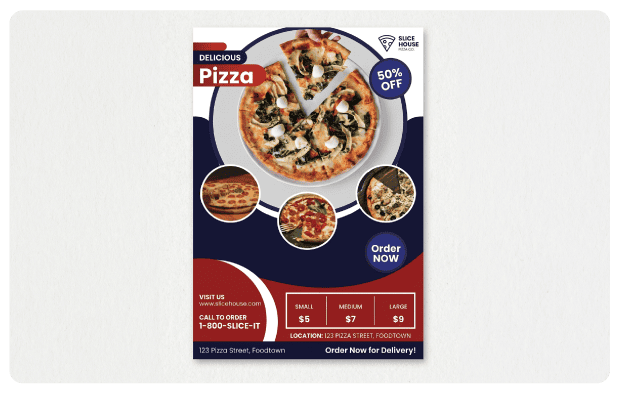
Eye-catching visuals like images, photos, and graphics are excellent for engaging recipients and keeping their eyes on the page. Make sure this imagery is relevant to the information contained within your mailers and draws consumers’ attention without distracting from your message.
Copy
Even the best message can be clouded by an illegible font or poor layout. It’s vital that your text fonts and colors are sharp, clear, and easy to read. That means choosing high-contrast colors and professional fonts that aren’t too abstract or disruptive.
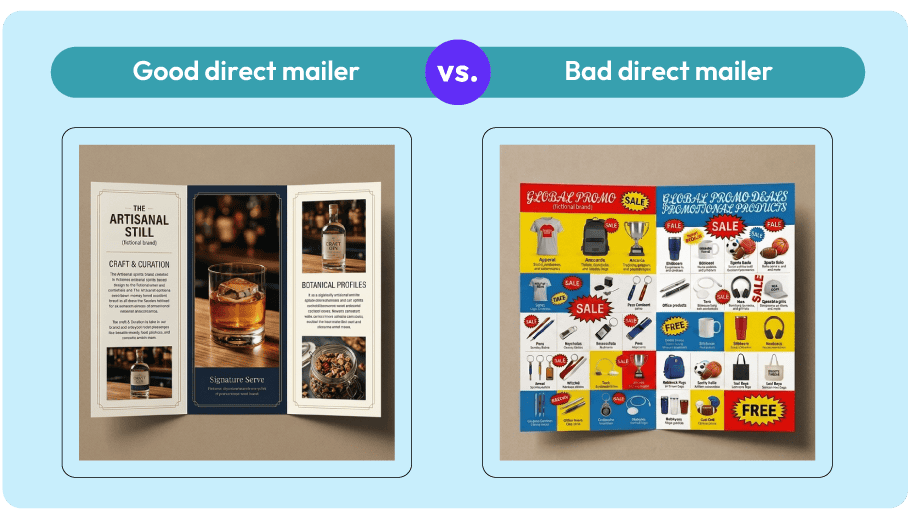
Additionally, try to limit the amount of text you use by keeping copy concise and incorporate lots of white space to avoid overwhelming readers with too much visual congestion.
Branding
Your branding should come through in both visual design and messaging. Creating a consistent brand image across all brand assets like colors, logos, fonts, and graphics ensures that your brand is accurately represented to consumers.
Along with visual consistency, aligning voice, tone, and narrative in your messaging is also essential for increasing brand recognition and awareness.
4. Personalize your mailers
Customizing your direct mailers with one-to-one personalization is among the most effective ways to improve performance, with 88% of marketers agreeing that personalized direct mail improves response rates.
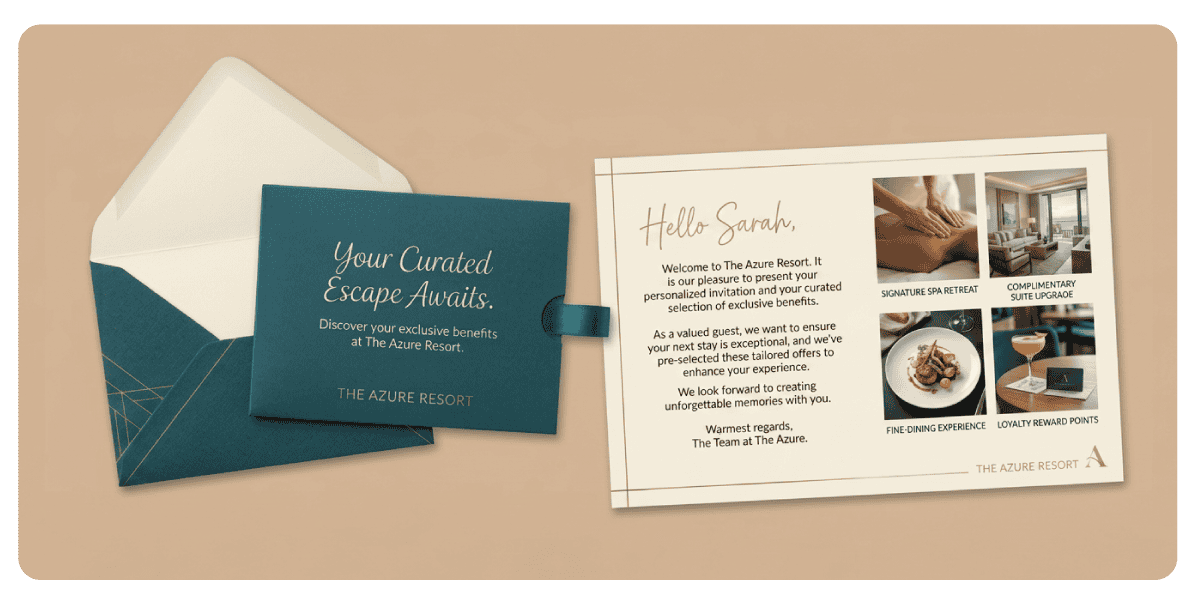
Many brands personalize mailers with customer names, but the strongest results come from incorporating details and dynamic offers based on loyalty data, behavior, and customer preference. This direct mail marketing strategy helps forge deeper connections with recipients while increasing trust.
You can also conduct A/B tests for different audience segments to determine what tactics each group responds best to.
5. Integrate with other marketing tactics
While direct mail has proven to be an effective marketing tactic on its own, it’s even more impactful when working alongside digital efforts. In fact, 86% of marketing executives say that direct mail campaigns exhibit better performance when paired with other channels.
There are numerous ways you can integrate your direct mail marketing with digital tactics, such as email, paid media, social, and SMS. When combined with these channels, direct mail can aid in further engaging prospects, retargeting inactive leads, and driving traffic to digital assets.
6. Track results and measure impact
Campaign measurement is crucial in determining the success of your direct mail marketing strategy. Depending on the call to action in your mailers, useful metrics you can track include:
- Calls
- Sales
- Demos booked
- Website visits
- Return on investment
- QR code scans
- Conversion rate
- Coupon code redemptions
- Cost per acquisition
If you’re not happy with your direct mail performance, consider running A/B testing to pinpoint what elements of your campaign aren’t working and adjust accordingly.
Direct mail marketing ideas and best practices
When you create your direct mail marketing strategy, consider following these best practices:
- Regularly maintain your mailing list: Your ability to reach prospects depends on the quality of your mailing list. That’s why it’s vital that you always keep your contact information and demographic data up to date so you can better engage consumers.
- Leverage audience segmentation: Separate your contact list into segments and customize your materials toward those groups to achieve more effective targeting and engagement.
- Use templates and pre-approved assets: If you’re an enterprise brand that sells through complex marketing networks, consider providing your channel partners with easily customizable templates and pre-approved marketing assets to ensure all materials are compliant with your brand standards.
- Partner with an end-to-end print provider: Using multiple print vendors can be complex and expensive. Consider partnering with a provider that handles every step of the print and fulfillment process, including sourcing, production, warehousing, inventory management, shipping, and delivery.
Create direct mail marketing campaigns that convert with Ansira
Empower your channel partners to create, send, and track high-impact direct mail campaigns while ensuring every mailer is on-brand. Ansira’s brand-to-local platform makes it easy for partners to design, personalize, and deploy direct mail while leveraging seamless segmentation.
Book a demo to see how it works.